Guides
How to Avoid Probate: Your Complete Guide for 2026
Avoiding probate saves your family time and money by keeping assets out of court. This guide covers trusts, TOD deeds, and beneficiary designations.
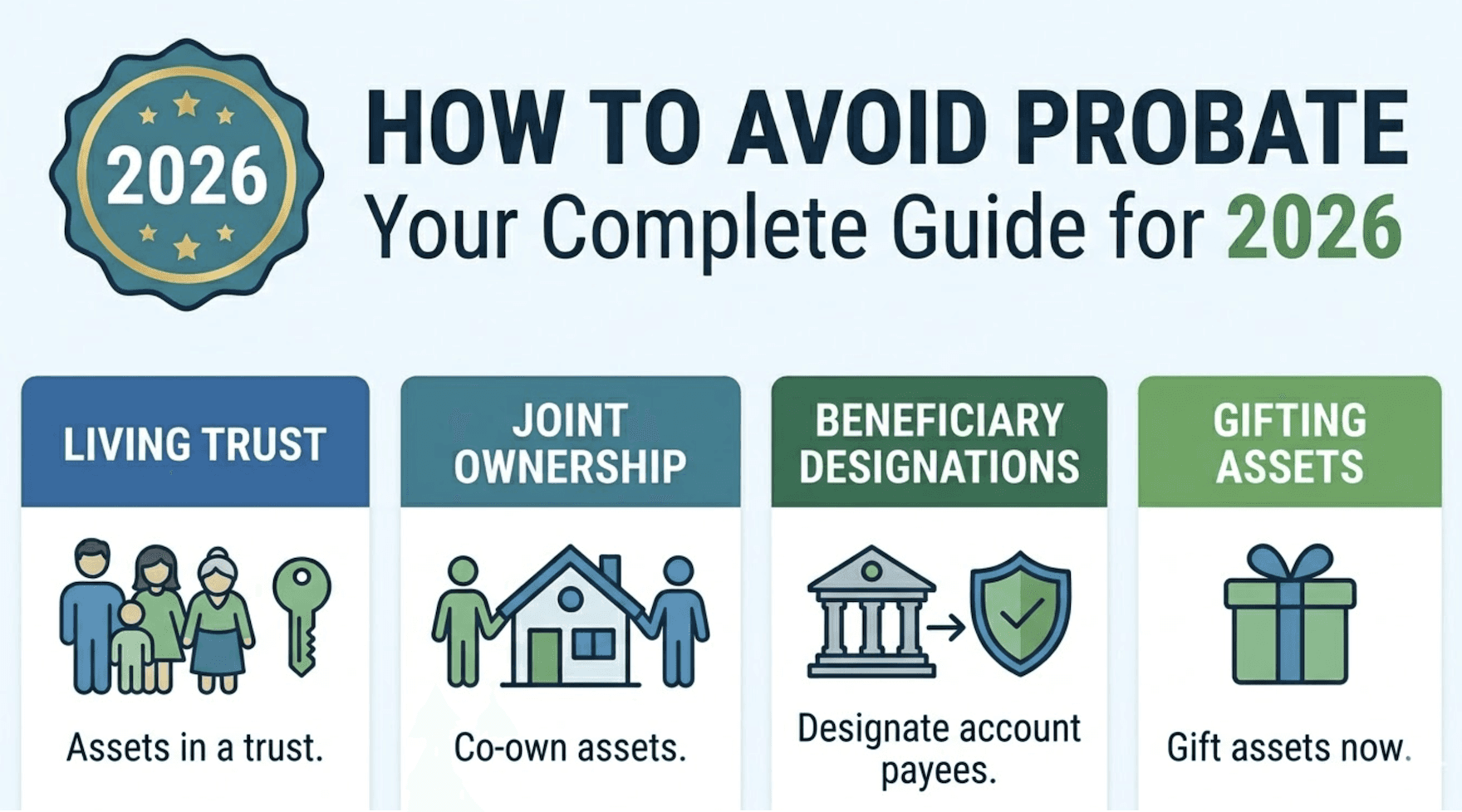


Probate can tie up your family's inheritance for months, drain thousands in legal fees, and put your financial details on public record. Most people assume a will solves this problem, but it actually guarantees a trip through probate court.
The right planning tools let your assets pass directly to the people you choose, with no court involvement at all. This guide covers exactly how to avoid probate using trusts, beneficiary designations, and ownership strategies that work.
What is Probate?
Probate is the court process that happens after someone dies. A judge validates the will, confirms debts get paid, and supervises how assets transfer to beneficiaries. The whole thing can take months or even longer than a year, depending on your state and how complicated the estate is.
You can avoid probate by setting up a revocable living trust, naming beneficiaries on your accounts, using transfer-on-death deeds for real estate, or holding property jointly with right of survivorship. Each of these tools lets assets pass directly to the people you choose without involving a court.
The person who manages probate is called the executor. This individual inventories everything the deceased owned, notifies creditors, handles taxes, and distributes what remains. It is a lot of work, and the court watches over every step.
Why Avoiding Probate Matters
People skip probate for practical reasons. The process is slow, expensive, and public.
Probate Takes Time
Your beneficiaries cannot touch inherited assets until probate wraps up. Courts have mandatory waiting periods, and backlogs add more delays. Meanwhile, property sits idle and bills keep arriving.
Probate Is Expensive
Filing fees, executor compensation, attorney costs, and appraisals all come out of the estate, often totaling 3% to 7% of the estate's value. In some states, fees are calculated as a percentage of total estate value, regardless of how much debt exists. That money would otherwise go to your loved ones.
Probate Is a Public Process
Once a will enters probate, it becomes public record. Anyone can look up the estate inventory, see what you owned, and learn who inherited what. For families who value privacy, this exposure feels intrusive.
Probate Can Cause Family Conflict
The formal court setting creates openings for disputes. Family members can contest the will, challenge the executor, or argue over valuations. A straightforward transfer can turn into a drawn-out legal fight.
Does a Will Avoid Probate?
A will does not avoid probate. In fact, a will requires probate to take effect. The court validates the document, confirms it meets legal requirements, and then supervises distribution.
A will still serves important purposes. It names guardians for minor children, specifies who receives your assets, and designates your executor. However, it does not bypass the court system.
What a will does: Directs how assets are distributed and names key decision-makers
What a will does not do: Skip probate court or speed up the transfer process
If probate avoidance is your goal, you will want additional tools beyond a basic will.
Can Probate Be Avoided Completely?
Yes. With proper planning, most or all of your assets can bypass probate entirely. The idea is to structure ownership and beneficiary designations so property transfers automatically when you die, with no court involvement.
Complete avoidance depends on your situation. Small items without formal title, like furniture or personal belongings, may still technically go through probate. Many states have simplified procedures for minor assets, though. The practical aim is reducing what requires court supervision, not eliminating every last detail.
Proven Ways to Avoid Probate
Several tools work reliably to keep assets out of probate court. The right combination depends on what you own and who you want to inherit it.
Revocable Living Trusts
A revocable living trust is the most comprehensive probate avoidance tool available. You create the trust, transfer assets into it during your lifetime, and name yourself as trustee. When you die, a successor trustee distributes everything to your beneficiaries, completely outside the court system.
The trust remains revocable, meaning you can change it, add assets, or dissolve it entirely while you are alive. You maintain full control the whole time. Herbie helps you create a revocable living trust and organize your assets in one place.
Beneficiary Designations
Retirement accounts, life insurance policies, and annuities allow you to name beneficiaries directly on the account. When you pass away, those assets transfer immediately to the people you designated, with no probate required.
Keeping beneficiary designations current matters. An outdated designation naming an ex-spouse, for example, can send assets to unintended recipients.
Transfer on Death Accounts
Investment and brokerage accounts often offer transfer-on-death registration, commonly called TOD. You name a beneficiary on the account itself, and ownership passes automatically when you die. During your lifetime, you retain complete control over the account.
Payable on Death Accounts
Bank accounts, including checking, savings, and CDs, can include payable-on-death designations, known as POD. The concept mirrors TOD accounts. You name who inherits, and the funds transfer directly without court involvement.
Joint Ownership with Right of Survivorship
Property owned jointly with right of survivorship passes automatically to the surviving owner. When one owner dies, the other becomes sole owner immediately. This arrangement works well for married couples.
Tenancy by the entirety offers similar protection specifically for married couples in states that recognize it. Both forms avoid probate for the jointly held property.
Lifetime Gifting
Giving assets away during your lifetime removes them from your estate entirely. What you no longer own cannot go through probate. Gift tax rules apply to transfers above the $19,000 annual exclusion per recipient, so this approach works best for modest amounts or as part of a broader plan.
Summary of Methods
Revocable Living Trust: best for real estate, investments, comprehensive planning
Beneficiary Designations: retirement accounts, life insurance
TOD/POD Accounts: bank and brokerage accounts
Joint Ownership: property shared with spouse or partner
Lifetime Gifting: reduces overall estate size
How to Avoid Probate on a Home
Real estate often represents the largest asset in an estate and the biggest probate concern. Several options exist for keeping your home out of court.
Transfer on Death Deeds
A transfer-on-death deed, sometimes called a beneficiary deed, names who inherits your property when you die. You retain full ownership and control while alive. When you pass, the property transfers automatically. Currently 32 states plus Washington, D.C. offer this option, so availability depends on where you live.
Adding a Joint Owner
Adding a spouse or child as joint tenant with right of survivorship means the property passes to them automatically. However, this approach has downsides worth considering.
Loss of control: The co-owner has legal rights to the property
Creditor exposure: The co-owner's debts or legal issues could affect your home
Transferring Your Home to a Trust
Deeding your home into a revocable living trust provides the most comprehensive protection. You remain in control as trustee, continue living in the property, and your beneficiaries inherit without probate. This approach avoids the complications of adding joint owners while achieving the same result.
When Probate Is Not Necessary
Not every asset requires probate avoidance planning. Some situations already bypass the court system.
Small Estate Exceptions
Most states offer simplified procedures for estates below certain value thresholds. Some allow affidavit transfers without any court filing. The limits vary significantly by state, ranging from a few thousand dollars to over $150,000.
Assets with Named Beneficiaries
Accounts with valid beneficiary designations skip probate automatically. If you have already named beneficiaries on retirement accounts and life insurance, those assets are covered.
Jointly Owned Property
Property titled with survivorship rights passes outside probate by operation of law. The surviving owner simply provides a death certificate to update records.
Common Mistakes When Avoiding Probate
Even well-intentioned plans fail when details get overlooked.
Forgetting to Fund Your Trust
Creating a trust accomplishes nothing if you do not transfer assets into it. An unfunded trust is just a document, and your property still goes through probate. Retitling accounts and deeding property into the trust completes the process.
Outdated Beneficiary Designations
Old designations cause problems. A deceased beneficiary or former spouse listed on an account can trigger probate or send assets to unintended recipients. Review designations after major life events like marriage, divorce, or the birth of a child.
Incomplete Asset Titling
Missing even one account means that asset goes through probate. A comprehensive inventory helps ensure nothing slips through the cracks.
Not Updating After Life Changes
Marriage, divorce, births, deaths, and new purchases all require plan updates. Herbie offers unlimited updates so your estate plan stays current as life evolves.
Do You Need an Attorney to Avoid Probate?
Many people successfully create trusts and estate plans using self-service platforms. Attorney-vetted documents, like those Herbie provides, meet professional standards without traditional legal fees.
Complex situations may benefit from personalized legal review. Business ownership, blended families, significant wealth, or unusual assets can introduce complications that warrant professional guidance. For most families, though, a well-designed platform may be able to assist with probate avoidance effectively.
Start Your Probate Avoidance Plan Today
Avoiding probate is achievable with the right tools. A revocable living trust combined with beneficiary designations covers most situations comprehensively.
The key is taking action while you can. Get started with Herbie to create your trust, organize your assets, and keep your plan updated, all in one place.
Frequently Asked Questions About Avoiding Probate
Is avoiding probate always a good idea?
Avoiding probate benefits most estates by saving time and money. Very small estates may qualify for simplified procedures that make formal avoidance planning unnecessary.
Do you need probate for estates under $50,000?
Many states offer small estate exemptions or affidavit procedures for estates below certain thresholds. Your state's specific limits determine whether simplified options apply.
Does naming a beneficiary on a bank account avoid probate?
Yes. A payable-on-death designation transfers funds directly to your named beneficiary without any court involvement.
Can you avoid probate without creating a trust?
Beneficiary designations, TOD and POD accounts, and joint ownership can avoid probate for specific assets. A trust provides the most comprehensive coverage across your entire estate.
What happens if only some of your assets avoid probate?
Assets without probate avoidance measures still go through court. The goal is minimizing what requires probate, even if small items remain.
How do you know if your probate avoidance plan is working?
Review your asset titles and beneficiary designations regularly. Herbie helps you keep everything organized and confirms your plan covers what it is designed to cover.
Probate can tie up your family's inheritance for months, drain thousands in legal fees, and put your financial details on public record. Most people assume a will solves this problem, but it actually guarantees a trip through probate court.
The right planning tools let your assets pass directly to the people you choose, with no court involvement at all. This guide covers exactly how to avoid probate using trusts, beneficiary designations, and ownership strategies that work.
What is Probate?
Probate is the court process that happens after someone dies. A judge validates the will, confirms debts get paid, and supervises how assets transfer to beneficiaries. The whole thing can take months or even longer than a year, depending on your state and how complicated the estate is.
You can avoid probate by setting up a revocable living trust, naming beneficiaries on your accounts, using transfer-on-death deeds for real estate, or holding property jointly with right of survivorship. Each of these tools lets assets pass directly to the people you choose without involving a court.
The person who manages probate is called the executor. This individual inventories everything the deceased owned, notifies creditors, handles taxes, and distributes what remains. It is a lot of work, and the court watches over every step.
Why Avoiding Probate Matters
People skip probate for practical reasons. The process is slow, expensive, and public.
Probate Takes Time
Your beneficiaries cannot touch inherited assets until probate wraps up. Courts have mandatory waiting periods, and backlogs add more delays. Meanwhile, property sits idle and bills keep arriving.
Probate Is Expensive
Filing fees, executor compensation, attorney costs, and appraisals all come out of the estate, often totaling 3% to 7% of the estate's value. In some states, fees are calculated as a percentage of total estate value, regardless of how much debt exists. That money would otherwise go to your loved ones.
Probate Is a Public Process
Once a will enters probate, it becomes public record. Anyone can look up the estate inventory, see what you owned, and learn who inherited what. For families who value privacy, this exposure feels intrusive.
Probate Can Cause Family Conflict
The formal court setting creates openings for disputes. Family members can contest the will, challenge the executor, or argue over valuations. A straightforward transfer can turn into a drawn-out legal fight.
Does a Will Avoid Probate?
A will does not avoid probate. In fact, a will requires probate to take effect. The court validates the document, confirms it meets legal requirements, and then supervises distribution.
A will still serves important purposes. It names guardians for minor children, specifies who receives your assets, and designates your executor. However, it does not bypass the court system.
What a will does: Directs how assets are distributed and names key decision-makers
What a will does not do: Skip probate court or speed up the transfer process
If probate avoidance is your goal, you will want additional tools beyond a basic will.
Can Probate Be Avoided Completely?
Yes. With proper planning, most or all of your assets can bypass probate entirely. The idea is to structure ownership and beneficiary designations so property transfers automatically when you die, with no court involvement.
Complete avoidance depends on your situation. Small items without formal title, like furniture or personal belongings, may still technically go through probate. Many states have simplified procedures for minor assets, though. The practical aim is reducing what requires court supervision, not eliminating every last detail.
Proven Ways to Avoid Probate
Several tools work reliably to keep assets out of probate court. The right combination depends on what you own and who you want to inherit it.
Revocable Living Trusts
A revocable living trust is the most comprehensive probate avoidance tool available. You create the trust, transfer assets into it during your lifetime, and name yourself as trustee. When you die, a successor trustee distributes everything to your beneficiaries, completely outside the court system.
The trust remains revocable, meaning you can change it, add assets, or dissolve it entirely while you are alive. You maintain full control the whole time. Herbie helps you create a revocable living trust and organize your assets in one place.
Beneficiary Designations
Retirement accounts, life insurance policies, and annuities allow you to name beneficiaries directly on the account. When you pass away, those assets transfer immediately to the people you designated, with no probate required.
Keeping beneficiary designations current matters. An outdated designation naming an ex-spouse, for example, can send assets to unintended recipients.
Transfer on Death Accounts
Investment and brokerage accounts often offer transfer-on-death registration, commonly called TOD. You name a beneficiary on the account itself, and ownership passes automatically when you die. During your lifetime, you retain complete control over the account.
Payable on Death Accounts
Bank accounts, including checking, savings, and CDs, can include payable-on-death designations, known as POD. The concept mirrors TOD accounts. You name who inherits, and the funds transfer directly without court involvement.
Joint Ownership with Right of Survivorship
Property owned jointly with right of survivorship passes automatically to the surviving owner. When one owner dies, the other becomes sole owner immediately. This arrangement works well for married couples.
Tenancy by the entirety offers similar protection specifically for married couples in states that recognize it. Both forms avoid probate for the jointly held property.
Lifetime Gifting
Giving assets away during your lifetime removes them from your estate entirely. What you no longer own cannot go through probate. Gift tax rules apply to transfers above the $19,000 annual exclusion per recipient, so this approach works best for modest amounts or as part of a broader plan.
Summary of Methods
Revocable Living Trust: best for real estate, investments, comprehensive planning
Beneficiary Designations: retirement accounts, life insurance
TOD/POD Accounts: bank and brokerage accounts
Joint Ownership: property shared with spouse or partner
Lifetime Gifting: reduces overall estate size
How to Avoid Probate on a Home
Real estate often represents the largest asset in an estate and the biggest probate concern. Several options exist for keeping your home out of court.
Transfer on Death Deeds
A transfer-on-death deed, sometimes called a beneficiary deed, names who inherits your property when you die. You retain full ownership and control while alive. When you pass, the property transfers automatically. Currently 32 states plus Washington, D.C. offer this option, so availability depends on where you live.
Adding a Joint Owner
Adding a spouse or child as joint tenant with right of survivorship means the property passes to them automatically. However, this approach has downsides worth considering.
Loss of control: The co-owner has legal rights to the property
Creditor exposure: The co-owner's debts or legal issues could affect your home
Transferring Your Home to a Trust
Deeding your home into a revocable living trust provides the most comprehensive protection. You remain in control as trustee, continue living in the property, and your beneficiaries inherit without probate. This approach avoids the complications of adding joint owners while achieving the same result.
When Probate Is Not Necessary
Not every asset requires probate avoidance planning. Some situations already bypass the court system.
Small Estate Exceptions
Most states offer simplified procedures for estates below certain value thresholds. Some allow affidavit transfers without any court filing. The limits vary significantly by state, ranging from a few thousand dollars to over $150,000.
Assets with Named Beneficiaries
Accounts with valid beneficiary designations skip probate automatically. If you have already named beneficiaries on retirement accounts and life insurance, those assets are covered.
Jointly Owned Property
Property titled with survivorship rights passes outside probate by operation of law. The surviving owner simply provides a death certificate to update records.
Common Mistakes When Avoiding Probate
Even well-intentioned plans fail when details get overlooked.
Forgetting to Fund Your Trust
Creating a trust accomplishes nothing if you do not transfer assets into it. An unfunded trust is just a document, and your property still goes through probate. Retitling accounts and deeding property into the trust completes the process.
Outdated Beneficiary Designations
Old designations cause problems. A deceased beneficiary or former spouse listed on an account can trigger probate or send assets to unintended recipients. Review designations after major life events like marriage, divorce, or the birth of a child.
Incomplete Asset Titling
Missing even one account means that asset goes through probate. A comprehensive inventory helps ensure nothing slips through the cracks.
Not Updating After Life Changes
Marriage, divorce, births, deaths, and new purchases all require plan updates. Herbie offers unlimited updates so your estate plan stays current as life evolves.
Do You Need an Attorney to Avoid Probate?
Many people successfully create trusts and estate plans using self-service platforms. Attorney-vetted documents, like those Herbie provides, meet professional standards without traditional legal fees.
Complex situations may benefit from personalized legal review. Business ownership, blended families, significant wealth, or unusual assets can introduce complications that warrant professional guidance. For most families, though, a well-designed platform may be able to assist with probate avoidance effectively.
Start Your Probate Avoidance Plan Today
Avoiding probate is achievable with the right tools. A revocable living trust combined with beneficiary designations covers most situations comprehensively.
The key is taking action while you can. Get started with Herbie to create your trust, organize your assets, and keep your plan updated, all in one place.
Frequently Asked Questions About Avoiding Probate
Is avoiding probate always a good idea?
Avoiding probate benefits most estates by saving time and money. Very small estates may qualify for simplified procedures that make formal avoidance planning unnecessary.
Do you need probate for estates under $50,000?
Many states offer small estate exemptions or affidavit procedures for estates below certain thresholds. Your state's specific limits determine whether simplified options apply.
Does naming a beneficiary on a bank account avoid probate?
Yes. A payable-on-death designation transfers funds directly to your named beneficiary without any court involvement.
Can you avoid probate without creating a trust?
Beneficiary designations, TOD and POD accounts, and joint ownership can avoid probate for specific assets. A trust provides the most comprehensive coverage across your entire estate.
What happens if only some of your assets avoid probate?
Assets without probate avoidance measures still go through court. The goal is minimizing what requires probate, even if small items remain.
How do you know if your probate avoidance plan is working?
Review your asset titles and beneficiary designations regularly. Herbie helps you keep everything organized and confirms your plan covers what it is designed to cover.
Share this article:


